8 B2B Ad Examples That Work in 2026
Parth Jasrapuria
Founder
A B2B marketer scrolls through a feed of earnest product screenshots, stock-photo handshakes, and headlines that sound like they were written by a committee trapped in an elevator. The thumb keeps moving. Then a video shows a product solving a real problem, a useful tool offers an answer, or a podcast host explains why a sponsor belongs in the conversation. Suddenly, the ad feels less like an interruption and more like something worth a moment.
These B2B ad examples show how brands can make business advertising clearer, more memorable, and easier to act on. They span video, LinkedIn, YouTube, Meta, and podcasts, with a plain-English teardown of each hook, why it works, and what a video-led team can borrow. The examples range from Volvo Trucks making a technical benefit visible to HubSpot using a useful free tool to attract interested marketers. No billion-dollar production budget or dramatic wind machine is required.
The useful lesson isn't “copy the ad exactly.” It's to identify the idea underneath: prove one claim, make the benefit easy to grasp, and give the right buyer a sensible next step. Each example includes a practical way to adapt that idea, plus a copy-ready template to help turn inspiration into a real campaign.
1. Volvo Trucks' The Epic Split
A truck's steering system isn't an obvious crowd-pleaser. Volvo Trucks made it one by turning precision steering into a visual demonstration: Jean-Claude Van Damme performs a split between two reversing trucks. The calm, slow-motion presentation makes the stunt feel even more striking, while the trucks make the product claim visible. Instead of asking viewers to trust a technical description, the video gives them something they can see.
The creative hook is the contrast between the unexpected human feat and the serious industrial machinery. It catches attention, but it also serves the message. The spectacle isn't decoration pasted onto a B2B ad. It helps demonstrate control and precision.
What video teams can borrow: Build the story around one product claim, then find a visual way to make that claim understandable without a paragraph of copy.
A warehouse-equipment company could show a forklift making a precise turn in a crowded aisle. An industrial software company could show an operator spotting a production issue and responding through a live dashboard. The point is to use a real product demonstration in a setting that makes its value obvious, rather than adding a stunt that has nothing to do with the product.
A template to adapt
Hook: “Can [product] handle [difficult real-world task]?” Demonstration: Show the product completing that task. Proof: Explain the product benefit in a short caption or voiceover. Next step: Invite viewers to watch a product demo or explore the solution.
A short cut can introduce the idea in paid placements, while a longer version can provide more context on YouTube or LinkedIn. Captions help viewers understand the video with the sound off. For practical guidance on planning a production, see commercial video production for B2B brands. Views may earn attention, but a clear demo link gives interested buyers somewhere useful to go.
2. IBM's Smarter Planet Campaign
IBM's Smarter Planet campaign made a complex technology story easier to repeat. Instead of leading with servers or technical specifications, it presented computing as a way to improve systems people rely on, including cities, hospitals, power grids, and traffic. Business publications, television, websites, and online banners carried the big idea into different settings.
That approach works because an executive can understand the promise before learning how the technology works. A campaign about smarter systems gives the product a role in a larger business outcome. IBM could then support the broad idea with customer stories, connecting the promise to practical applications rather than leaving it as a slogan floating in space.

Make the big idea repeatable
A cloud infrastructure company might lead with “Keep critical services available,” then use an explainer to show how its platform supports that promise. A consulting firm might focus on making complex changes easier for employees to adopt, with customer stories showing what that looks like in practice. Each execution can vary by channel, but the central promise should stay recognizable.
A simple template looks like this:
Promise: “[Business outcome] without [common obstacle].”
Proof: A customer story, product demonstration, or clear explanation.
Format: A short headline for a banner, a fuller explanation in a video, and supporting detail on a landing page.
The same idea can also inform measurement. A team might monitor branded searches and direct visits alongside campaign responses, then compare results with the purpose of the campaign. Those indicators provide context, not automatic proof that an ad caused a sale. A big brand promise still needs evidence, or it's just a very expensive thought bubble.
3. Intel Inside
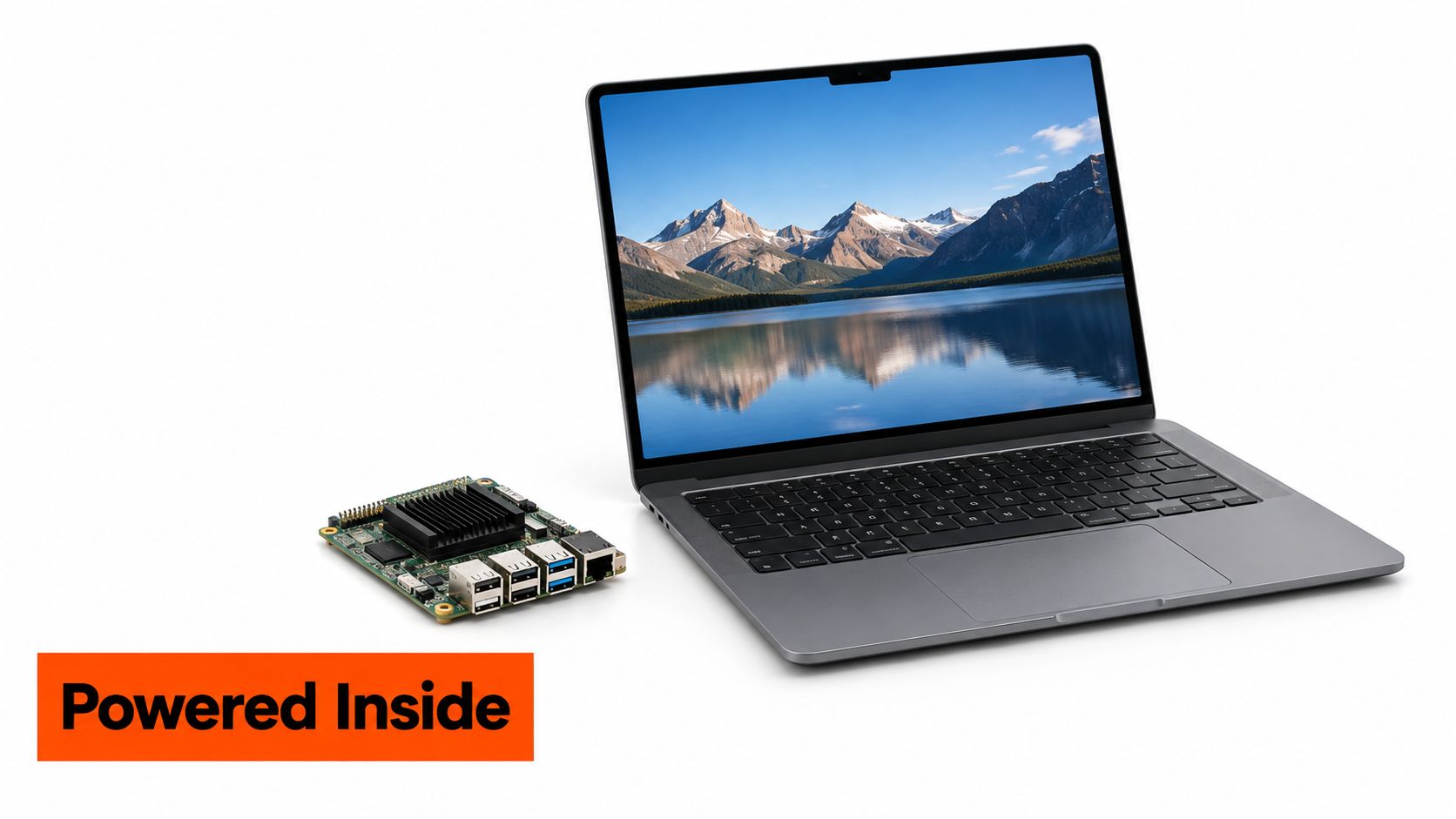
Intel's chips went into computers made by other companies. Intel Inside turned that behind-the-scenes role into something end customers could recognize. PC makers could feature the Intel badge on products and in co-op advertising, while Intel helped explain why its component mattered to the finished computer.
The clever move was to give a B2B product a visible identity at the point where the end customer made a choice. A component supplier doesn't always have to stay invisible just because another company sells the finished product. If buyers understand that one component contributes to the overall experience, partners can benefit from showing that connection.
Give partners a simple way to show the value
A cybersecurity provider might create a “Protected by” badge for partner product pages. A manufacturer could supply short videos explaining how a specialized component helps the complete product perform. The message needs to be simple enough for a partner's sales team to use, not just clever enough to win an internal presentation.
Copy-ready partner message: “Powered by [component or platform], built to help [customer] achieve [clear benefit].”
Partners need practical materials to put that message to work: a badge, approved wording, ready-made video clips, and clear guidance on where each asset belongs. Co-marketing support can help encourage participation, while partner pages and packaging make the contribution visible. The badge should represent a benefit, not merely another logo asking for a place at the bottom of the page.
4. HubSpot's Free Marketing Tools
A free tool can feel less like an ad and more like a useful favor. HubSpot's Website Grader offered marketers a way to assess their websites and receive a report, while also introducing them to HubSpot's software. Its free CRM has similarly served as an entry point into broader marketing and sales tools. The immediate offer helps with a real task; the next step connects that task to a larger product.
The hook is the buyer's problem, not the company's feature list. A marketer who wants to improve a website has a reason to try a grader. Once the tool has provided useful information, a relevant product offer feels more natural than an unrelated sales pitch appearing out of nowhere.
Turn a useful asset into a clear path
A B2B team could offer a website audit, onboarding checklist, or calculator that answers one specific question. A short walkthrough video can show what the tool does and what the user gets from it. The results page should then offer one sensible next action, such as seeing how the related product addresses a problem the report identified.
Copy-ready template: “Find out how [specific business area] is performing. Use the free [tool] to get [useful result], then see how [product] can help with [next problem].”
The tool should be easy to share with teammates, especially if several people contribute to a decision. Search advertising can help connect it with people actively looking for an answer. In fact, the supplied benchmark says 61% of B2B marketers identify search engine marketing and PPC as paid channels delivering the best results, as summarized in B2B digital marketing budget allocation statistics. A useful tool can support that intent, but the results page still needs to explain what happens next.
5. LinkedIn Thought Leader Ads and Sponsored InMail
A useful LinkedIn ad often sounds like a knowledgeable person talking about a real business problem, not a software company trying to impersonate one. Thought Leader Ads can promote expert posts, while Sponsored InMail can invite a selected audience to a webinar, demo, or case study. A founder discussing a practical challenge may feel more approachable than a polished graphic with six claims and a tiny logo.
The hook should match the audience. A finance leader may care about visibility into spending; an operations leader may want fewer handoffs. A cybersecurity company could invite IT directors to a breach-prevention webinar, while a software firm could offer finance leaders a short product tour. A shared company promise can stay consistent while each ad changes its proof and wording to match the role.
Write for a person, not a job-title database
A practical Sponsored InMail message can start with a work problem, offer one useful resource, and close with a single next step. Keeping the copy concise makes the invitation easier to understand. For a short video, test different opening hooks while keeping the offer and landing page consistent. That helps the team learn whether the opening message, rather than a completely different campaign, earned attention.
Copy-ready message: “Hi [audience role], [common problem] can make [important task] harder than it needs to be. This short [demo, guide, or webinar] shows a practical way to approach it. [One clear next step].”
The test shouldn't stop at cheap clicks. HubSpot reported 1%–3% click-through rates for its LinkedIn text-ad program, 60% higher than its average across other social networks, with an average cost per click of approximately $3; the company also reported higher-quality leads that converted faster. Those are historical case-study results, not universal benchmarks. The audience, creative, offer, and campaign goal all matter. The case is available in LinkedIn's HubSpot text-ads customer story. Role-specific hooks and careful lead-quality tracking matter more than chasing the lowest click cost. For practical campaign ideas, see video advertising on LinkedIn. Teams looking to reduce wasted LinkedIn ad spend can also compare audience fit, creative, and follow-up quality instead of judging an ad by clicks alone.
6. Google Demand Gen With YouTube and Shorts
Some buyers haven't started searching for a solution yet. A short video can introduce a problem and a useful idea before a prospect types a product category into a search box. Google Demand Gen campaigns offer placements across YouTube, YouTube Shorts, Gmail, and Discover, making them a way to distribute visual creative beyond an active search.
For example, an analytics platform could use a short vertical ad to raise a question about reporting delays, then offer a longer explainer for viewers who want more detail. A cybersecurity vendor could introduce a free audit tool through a YouTube video. The short version gets to the problem quickly; the landing page answers the next question instead of greeting visitors with a maze of product menus.
Match the edit to the placement
A practical creative set can include a vertical cut for Shorts and a widescreen version for YouTube. Each version should name the buyer's problem early, show a relevant detail, and use a clear next step. Different openings can test distinct angles, such as a common workflow frustration versus a product demonstration. Existing customers can be excluded from a new-customer campaign when that matches the campaign goal.
Google's research found that 70% of B2B buyers and researchers watched video throughout the path to purchase, a 52% increase over two years. Nearly half watched at least 30 minutes of B2B-related video during their research, and almost one in five watched more than an hour, according to Google's research on the changing face of B2B marketing. That supports building a sequence of helpful videos rather than asking one short ad to explain everything.
Copy-ready sequence: “Name the problem” in the opening clip, “show the approach” in the explainer, and “demonstrate the product” for viewers comparing solutions. Teams planning their YouTube advertising videos can track clicks alongside assisted demos and view-through conversions, then use Google Ads campaign operations to support consistent campaign management.
7. Meta Lead Ads With Instant Forms
Meta Lead Ads let people respond inside Facebook or Instagram instead of leaving the app for a separate landing page. A prefilled form can make it easier to request a checklist, template, or webinar. That convenience is useful when the offer is clear and the form doesn't ask a busy prospect to complete a small tax return just to get a PDF.
A software company could promote an onboarding checklist with a short video showing the kind of problem it helps solve. A professional services firm could advertise a webinar to finance leaders, using an instant form to collect the registration details. In each case, the video explains the value of the offer, while the form handles the request.

Make the easy response a useful response
A fast form submission doesn't automatically mean a qualified lead. A team can connect the form to its CRM, follow up promptly, and check whether the person's role matches the intended audience. Keeping the form focused helps avoid unnecessary friction, while CRM fields can support later qualification.
Offer template: “Get the [checklist, template, or webinar] for [specific work problem]. The short video shows what it covers. Request it here, and [explain what happens next].”
A useful creative test compares a short video that demonstrates the offer with a static image that states it directly. The team can then review both form completions and downstream lead quality. The supplied benchmark reports that LinkedIn video ads combined with Lead Gen Forms receive 1.6 times higher form open rates than video ads without that combination, while LinkedIn says 93% of B2B marketers agree video is better for brand recall than single-image ads, in its video measurement guidance. Those figures describe LinkedIn, not Meta, but the practical principle still applies: make the offer clear, then judge the response by more than form volume.
8. Host-Read Podcast Sponsorships
A host-read podcast ad uses the host's voice to introduce a sponsor in the flow of a show. That can make the message feel more like a relevant recommendation than a mystery interruption from a voice that sounds like it's selling car insurance. Niche shows about marketing, finance, or software can provide a natural setting for B2B products, especially when the host can explain why the offer may matter to listeners.
A B2B software company could sponsor a marketing podcast and offer a custom link to a useful tool. A consulting firm might sponsor a finance show, then share a strong episode clip on LinkedIn. The clip extends the campaign into another channel, while the podcast placement reaches listeners in a context they've already chosen.
Give the host a real reason to talk
A host-read ad works best when the host can describe a genuine use case in ordinary language. A generic paragraph of product claims can sound like someone reading the terms and conditions at speed. A real example, a clear listener benefit, and one action make the message easier to follow.
Copy-ready host script: “Today's episode is supported by [brand]. If [specific audience] is dealing with [problem], [product or resource] can help with [practical benefit]. Visit [custom URL] to [single action].”
A memorable URL or promo code can help connect visits to the sponsorship. Asking new leads how they heard about the company adds another useful signal, particularly when people remember the host but forget which episode mentioned the product. Sponsoring several episodes can build familiarity, and repurposing a short clip can give the message more life than one appearance. The clip should preserve the context, not just chop out a sentence that sounds impressive on its own.
8 B2B Ad Examples: Strategy Comparison
Example | Implementation Complexity | Resource Requirements | Expected Outcomes | Ideal Use Cases | Key Advantage
Volvo Trucks “The Epic Split” | High | Cinematic video production, stunt planning, potential celebrity costs | Broad awareness and memorable visual proof; lead impact may vary | Demonstrating a product capability in a striking way | Makes a technical claim easy to see and remember
IBM “Smarter Planet” | High | Consistent creative assets and investment across multiple channels | Long-term brand recognition and stronger executive-level relevance | Enterprise brands explaining complex technology through business outcomes | Creates a unified story across channels
Intel Inside | High | Partner agreements, co-op funding, logo and marketing assets | Greater end-customer demand and stronger component recognition | Suppliers whose products are integrated into partner offerings | Builds trust and demand through partner brands
HubSpot Free Marketing Tools | Medium–High | Tool development and maintenance, SEO, content, and lead routing | Buyer-intent traffic, trust, and potential leads | Solving a specific buyer problem before offering paid products | Delivers practical value before a sales conversation
LinkedIn Thought Leader Ads and Sponsored InMail | Medium | Expert content, ad budget, audience targeting, and landing pages | Targeted engagement, content views, and direct responses | Reaching professional decision-makers with relevant content or offers | Combines professional targeting with a personal voice
Google Demand Gen with YouTube and Shorts | Medium–High | Multiple video cuts, ad budget, audience data, and conversion tracking | Awareness and assisted conversions among pre-search audiences | Introducing a complex product through short video explainers | Reaches audiences across several Google placements
Meta Lead Ads with Instant Forms | Low–Medium | Short creative assets, CRM integration, and prompt sales follow-up | Fast form submissions; lead quality may vary | Testing webinars, checklists, and other low-friction offers | Simplifies sign-up with pre-filled forms
Host-Read Podcast Sponsorships | Medium | Podcast sponsorship budget, host-read ad, and tracking link or code | Trust and familiarity among niche audiences; results may take time | Reaching focused professional communities through niche shows | Host endorsement can make the message feel personal
Steal These Ideas for Your Next Campaign
Strong B2B ad examples don't all look alike. Volvo Trucks used a memorable demonstration to make a technical benefit visible. IBM built a business-outcome story that could travel across channels. Intel helped a B2B component become recognizable to end customers, while HubSpot used a free tool to make its product relevant through a useful task. LinkedIn, YouTube, Meta, and podcasts each offer different ways to bring a message to a specific audience.
The shared lesson is simple: start with the buyer's problem, make one promise, show credible proof, and offer a clear next step. A team can turn that into a repeatable video-led process without making every ad a cinematic masterpiece.
A simple ad template to reuse
Hook: Name a recognizable problem or show an unexpected demonstration.
Value: Explain the benefit in plain language.
Proof: Show the product, a customer example, or a useful result.
Action: Invite the viewer to watch a demo, request a resource, or take another clear step.
Follow-up: Connect responses to CRM and campaign reporting so the team can assess lead quality and pipeline, not just clicks.
Then adapt the core idea to the channel. A LinkedIn video might feature an expert explaining the problem. A YouTube cut might demonstrate the product. A Meta ad could promote a checklist through an instant form. A podcast host could share the same useful offer in a conversational way. Keep the main promise recognizable, while adjusting the format and supporting proof for the audience and placement.
A winning ad also isn't always the one with the highest click-through rate. The supplied ANA research summary says 98% of respondents considered creativity extremely or very important, while 57% were equally confident in measuring marketing's impact on financial performance and 78% said measuring creative impact was highly important. Those findings, summarized by Chief Marketer's report on creative effectiveness, underline why a team should connect creative tests to suitable business measures. A brand-building video and a lead-form ad may have different jobs, so they need more than one yardstick.
For a video-led campaign, teams can test hooks, audience messages, and formats while keeping the offer clear. They can use short-term signals such as qualified landing-page engagement and longer-term measures such as opportunity creation and influenced pipeline. The goal isn't to make every creative do everything. It's to learn which idea helps which buyer move forward. For teams planning scalable AI video ad concepts, the same rule applies: useful concepts still need a relevant audience, credible proof, and a measurable next step.
Frequently asked questions about B2B ad examples
What makes a B2B ad effective?
An effective B2B ad connects one buyer problem to a clear promise, backs it with relevant proof, and gives the viewer an understandable next step. The right measure depends on the goal, so clicks shouldn't stand in for lead quality or commercial impact.
Which platforms can B2B advertisers use?
B2B teams can use LinkedIn, YouTube, Meta, search advertising, display placements, and podcasts. The best fit depends on the audience, the offer, and whether the campaign needs to capture existing interest or introduce a solution to people earlier in their research.
Should a B2B campaign use different messages for each stakeholder?
A campaign can keep one shared strategic promise while adapting the language and proof for different roles. An end user may care about ease of adoption, while a finance leader may want confidence in the business case. One idea can speak to both without pretending their concerns are identical.
Is video useful for B2B advertising?
Video can demonstrate a product, explain a complex idea, or help a buyer understand an offer before speaking with sales. LinkedIn reports that almost 80% of its users watch video ads with the sound turned off, which is why clear captions matter; the platform also reports that ads with an offer in the headline achieved an average 8% higher completion rate, and time-sensitive offers reached 1.2 times the average completion rate, according to its video ads guidance. Those are LinkedIn-specific findings, not guarantees for every campaign.
What should teams measure beyond clicks?
Teams can pair immediate response measures with lead quality, qualified opportunities, pipeline contribution, and conversion progress. The measures should match the campaign's job. An ad designed to introduce a brand shouldn't be judged exactly like a form designed to collect demo requests.
For search, social, video, and other digital channels, budgets have increasingly shifted toward measurable online formats. The supplied market summary reports approximately $37.68 billion in U.S. B2B advertising spending in 2024, and projects digital B2B advertising to rise from $18.34 billion in 2024 to $23.05 billion in 2026; these figures and the wider context are summarized in B2B marketing statistics. That context makes disciplined measurement useful, but no spending figure can tell a team whether its own creative is working. The campaign still needs clear goals and relevant evidence.
ContentBuck plans, produces, and scales video-led acquisition systems for B2B companies, including ad creatives, animated explainers, YouTube content, and platform-ready edits. Teams can visit ContentBuck to explore support for testing hooks, refreshing creative, and turning one useful ad idea into a repeatable campaign.
Parth Jasrapuria
Founder at ContentBuck
Building video systems for B2B businesses. Obsessed with YouTube growth, creative strategy, and organic SEO.