How to Start a Successful YouTube Channel: The B2B Playbook
Parth Jasrapuria
Founder
60% of B2B buyers use YouTube during evaluation, and 82% choose a vendor already on their shortlist. A successful channel starts by helping the right buyer make a safer decision, not by collecting subscribers.
That's why many B2B channels underperform. Companies treat YouTube like a broadcast tool, publish feature tours, celebrate views, and then wonder why the sales team hears nothing but the gentle sound of crickets. YouTube works better as a buyer-journey system, where each video answers a specific question, earns attention, and moves a qualified viewer toward the next useful action.
YouTube says recommendations use signals such as clicks, watch time, likes, dislikes, shares, survey responses, and viewing history, and that recommendations generate more overall viewership than subscriptions or search. The platform also identifies average view duration and average percentage viewed as ranking signals in its explanation of the recommendation system. For B2B marketers, that creates a practical rule: make videos people choose, finish, remember, and use while evaluating a purchase.
Why Most B2B Channels Fail Before They Start
60% of B2B buyers use YouTube during evaluation, while 82% choose a vendor already on their shortlist, according to the buyer-behavior data compiled by Sell on Tube. The opportunity already exists. The problem is that many companies approach YouTube as if the platform were a digital billboard with a comments section.
A subscriber-first strategy creates the wrong incentives. Teams make broad awareness videos, chase impressive view counts, and ask viewers to subscribe before explaining why the channel deserves another visit. A B2B buyer doesn't need more corporate wallpaper. They need to understand a problem, compare options, assess risk, and decide whether a vendor understands their situation.
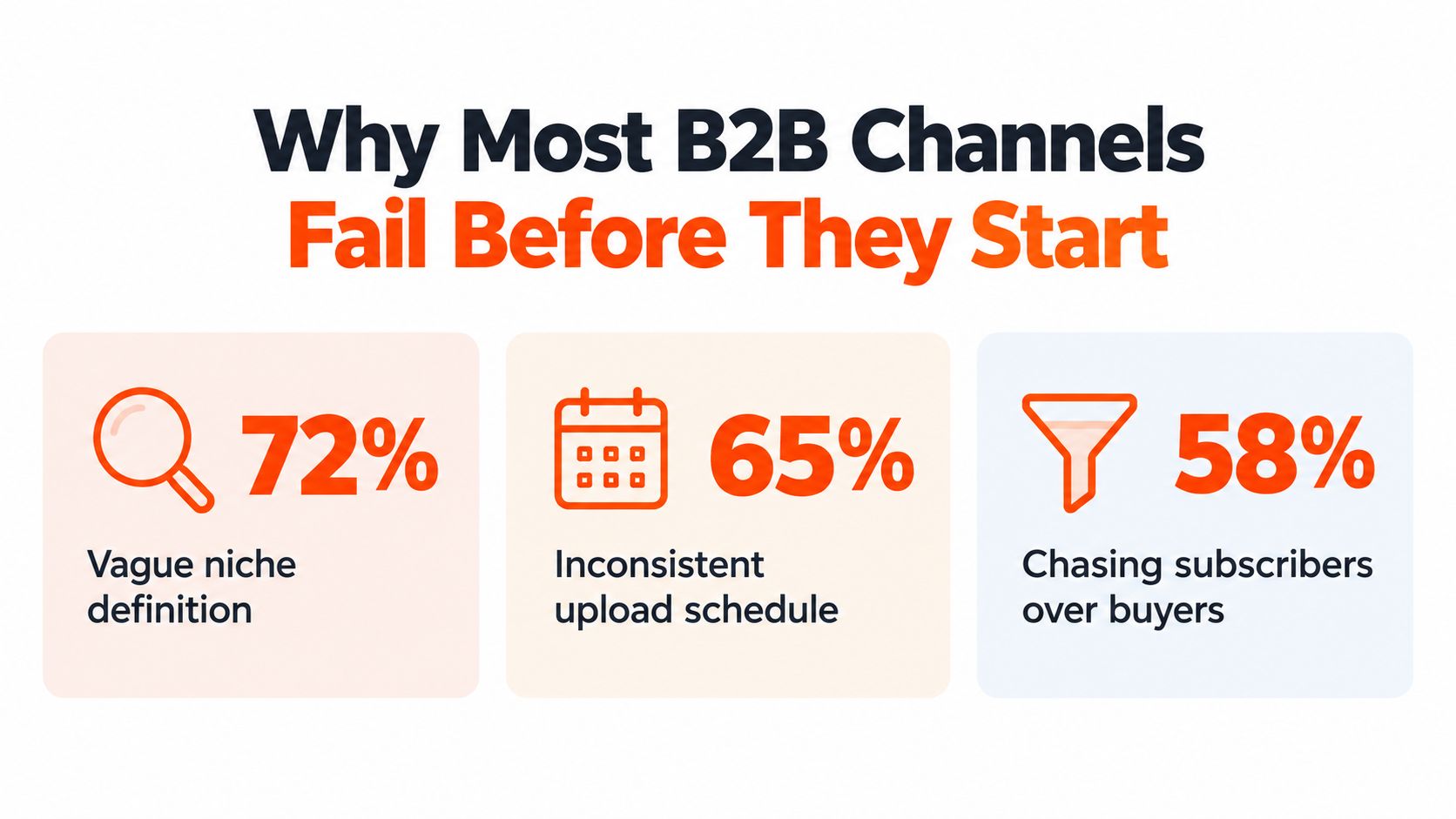
Replace subscriber thinking with buyer thinking
A successful B2B channel can have modest reach and still influence valuable sales conversations. Its videos might target a narrow question such as how a finance team audits subscription revenue, how an agency chooses a reporting stack, or how a security leader evaluates implementation risk.
The operating model is simple:
Discovery: Answer a specific problem a potential buyer already recognizes.
Education: Explain the system, trade-offs, and terminology behind that problem.
Evaluation: Compare approaches, demonstrate workflows, and address objections.
Decision support: Show implementation details, proof, and the path to a sales conversation.
Practical rule: A qualified viewer who watches the right video is more valuable than a large audience that never had a reason to buy.
YouTube recommends judging content through appeal, engagement, and satisfaction. Appeal asks whether viewers choose the video. Engagement asks whether they continue watching. Satisfaction asks whether the experience met expectations. That framework is more useful than treating subscriber count as a scoreboard, especially for SaaS, consulting, agencies, and complex products.
A channel should therefore track impressions, click-through rate, average view duration, percentage viewed, returning viewers, and qualitative feedback. Business teams should add website visits, demo assists, email sign-ups, sales-call mentions, branded search, and influenced opportunities. A viral video can be entertaining. A useful video can help close a deal. Those aren't the same achievement.
Picking a Niche That Actually Converts Buyers
“Businesses that need software” isn't a niche. It's an invitation for every possible viewer to walk in, browse the shelves, and leave without buying anything.
A converting niche starts with one clearly defined viewer and one recurring problem. A software company might choose operations leaders at growing SaaS firms who need to reduce manual revenue reporting. A professional-services firm might focus on founders who need to prepare for a complex procurement process. The narrower definition makes topic selection easier because the team knows whose language to use.

Start with customer language
Sales calls, support conversations, onboarding notes, and search queries contain better video ideas than an internal brainstorm usually produces. Look for repeated phrases, objections, failed workarounds, and questions prospects ask just before they consider a vendor.
A practical research pass should identify:
The urgent problem: What breaks, slows down, or creates risk?
The desired outcome: What would the buyer like to accomplish?
The objection: Why might the buyer delay, reject, or distrust a solution?
The buying language: What words does the buyer use instead of the company's polished category label?
Create three to five content pillars around those findings. One pillar might cover diagnosis, another implementation, another comparisons, and another customer education. Each pillar should serve a different buyer question rather than repeat the same product pitch wearing a different hat.
Prioritize intent over popularity
A topic with broad appeal can attract people who will never enter the sales process. A narrower comparison or implementation question may attract fewer viewers but stronger commercial interest. The choice depends on the sales cycle, the problem's urgency, competitor coverage, and whether the company has credible expertise to offer.
A useful test asks whether a viewer could move from the video to a sensible next step. If the answer is a checklist, product comparison, technical consultation, or demonstration, the topic probably has commercial value. If the only next step is “subscribe for more random thoughts,” the strategy needs another cup of coffee.
The niche shouldn't be so narrow that the team runs out of meaningful questions, but it should be specific enough that the ideal viewer recognizes the channel as relevant. That balance gives YouTube clear audience signals and gives sales a library of content aligned with real conversations.
Building a Repeatable Content System
One well-produced video proves that a team can produce one well-produced video. It doesn't prove the team can build a channel. Sustainable growth requires a repeatable system that connects audience questions, production decisions, and performance review.
Begin with the content pillars, then map each proposed video to a searchable or commercially relevant intent. Before filming, write the working title, thumbnail concept, opening hook, proof point, main teaching sequence, and call to action. This preparation prevents a common B2B failure: a technically accurate video that takes too long to reach the reason anyone clicked.
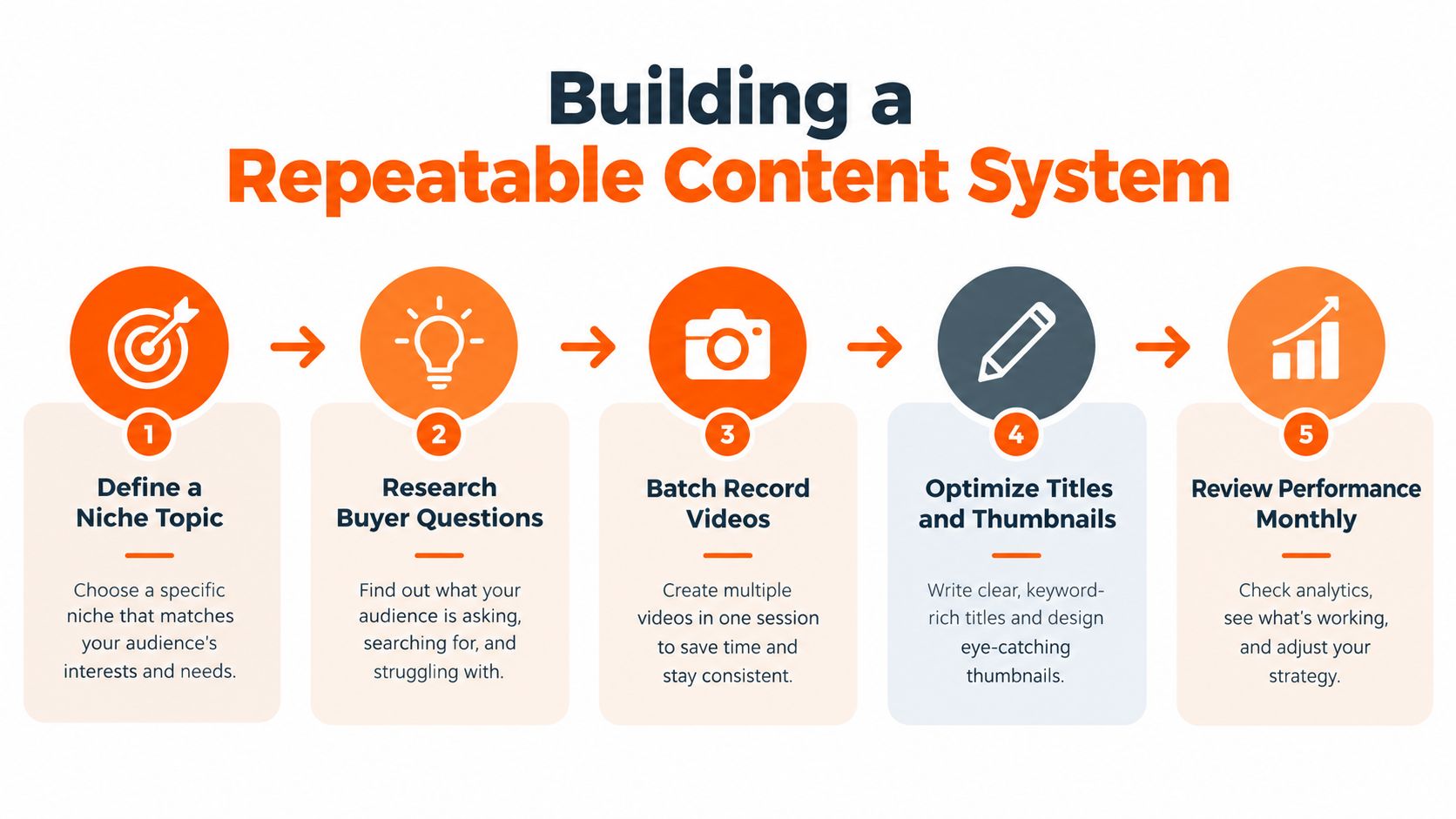
Use one production brief for every upload
The brief should answer five questions:
Who is watching? Name the role, situation, and problem.
What promise does the packaging make? The title and thumbnail need one clear outcome.
What happens immediately? The opening should begin solving the problem rather than displaying a long logo animation.
What proves the point? Use a screen recording, workflow, example, calculation, or expert explanation.
What should happen next? Point to a related video, resource, email sign-up, or sales action that fits the viewer's stage.
YouTube's recommendation system measures more than raw minutes. The platform reports that it also evaluates “valued watch time” through viewer surveys, which reinforces the difference between keeping someone trapped and giving them a useful experience. A viewer who finishes a practical tutorial and watches the next related lesson provides stronger evidence of satisfaction than a viewer who clicks a dramatic title and exits during the introduction.
The best B2B format is rarely the most cinematic one. It's the format a team can repeat without lowering usefulness.
Batching can help. A subject-matter expert can record several related lessons in one session, while the production team reuses lighting, screen-recording templates, examples, and visual assets. A channel manager can review Cometly's channel scaling guide when deciding how to structure repeatable production and measurement as the channel grows.
The final system should make quality visible. If a video underperforms, the team can identify whether the issue was topic selection, packaging, opening, explanation, or CTA. Without that structure, every weak upload becomes a vague debate about “the algorithm,” which is the marketing equivalent of blaming the weather for an unfinished roof.
Packaging and Retention Tactics That Drive Clicks and Views
A YouTube video has a sequence of promises. The title identifies the problem or outcome. The thumbnail makes the value legible at a glance. The opening confirms that the viewer made the right choice. The body earns continued attention. The call to action gives that attention somewhere useful to go.
B2B titles work best when they name a clear situation and result. Examples include “How to Audit SaaS Revenue Reporting” or “Fix a Slow WordPress Site in 10 Minutes.” The title shouldn't promise a transformation the video can't deliver. A thumbnail can emphasize the tension, such as “Manual Reports?” or “Find the Bottleneck,” while the title supplies the context.
For practical visual guidance, teams can use this thumbnail design resource to refine contrast, hierarchy, text length, and visual focus. The thumbnail doesn't need to explain the entire video. It needs to help the right viewer understand why the video deserves a click.
Diagnose the first thirty seconds
YouTube's analytics separates appeal from engagement and satisfaction. That makes the retention curve a production diagnostic rather than a decorative graph.
High impressions, weak CTR: The topic may be relevant, but the title or thumbnail isn't compelling or clear.
Strong CTR, sharp early drop: The opening probably delays the promised outcome, uses a mismatched hook, or starts with unnecessary brand material.
Stable opening, later drop: A section may be too slow, too technical, repetitive, or disconnected from the viewer's original question.
Good viewing, weak leads: The CTA may be generic, poorly timed, or aimed at the wrong buyer stage.
YouTube recommends comparing retention with the last ten videos of similar length instead of relying on a universal target, as described in its analytics guidance. That comparison matters because a detailed product demonstration and a short answer video should not be judged as if they serve the same job.
Use the curve to change one production variable at a time. If viewers leave when a presenter reads a feature list, show the product solving a customer problem before introducing the features. If the opening loses people, remove the biography and start with the diagnosis. YouTube's retention analytics documentation explains how creators can inspect the moments that hold attention and the points where viewers leave.
Turning Viewers Into a Repeat Audience
A B2B YouTube channel earns business value when viewers return with more informed questions. Discovery creates awareness, but repeated educational interactions help a buyer assess expertise, reduce perceived risk, and decide whether a conversation is worth starting.
YouTube introduced more refined audience categories in July 2025, distinguishing new viewers, casual viewers, and regular viewers, as reported by PPC Land. These categories help identify whether search traffic is developing into an audience that deliberately returns for guidance.
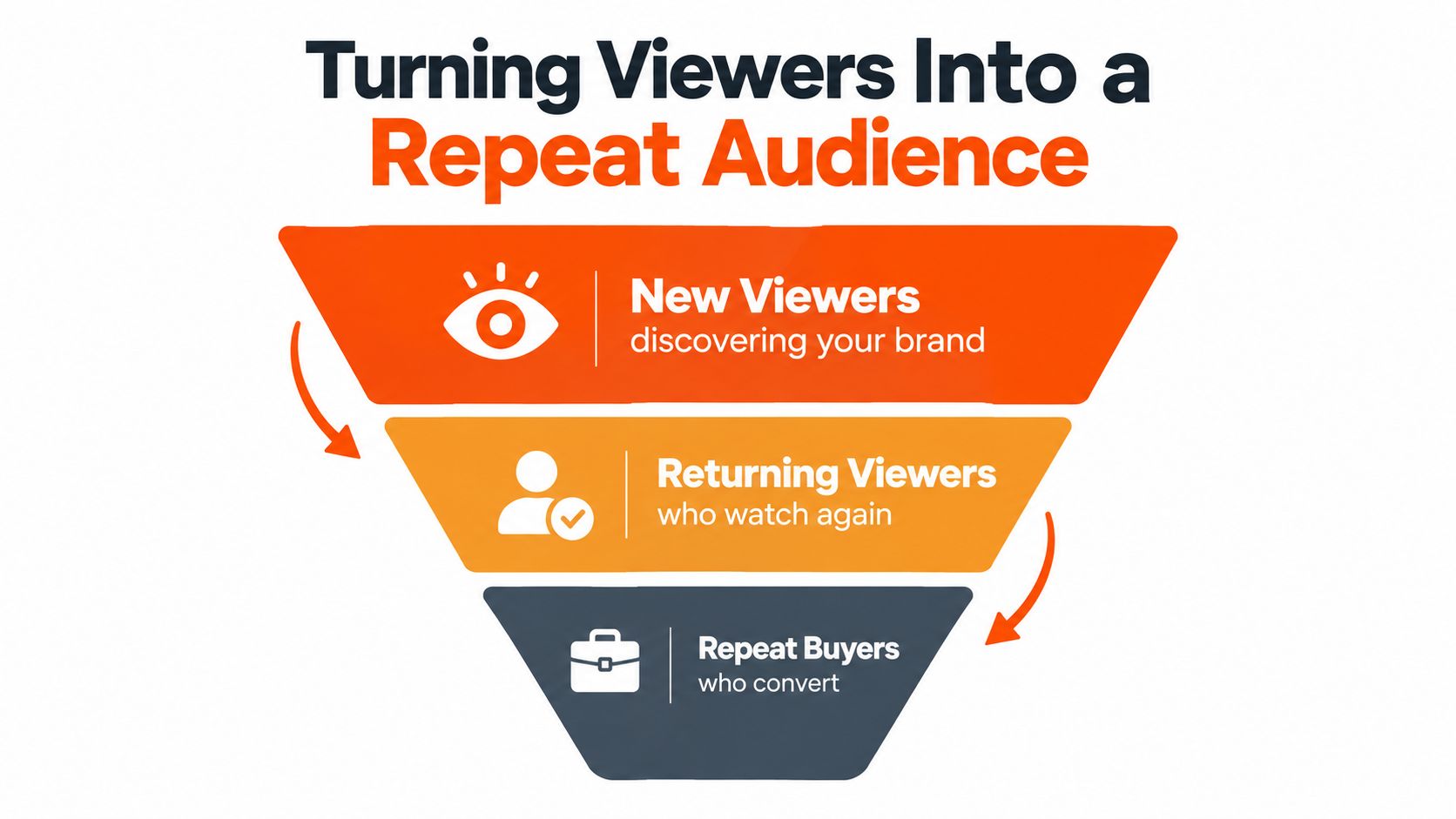
Build sequences instead of content piles
A practical sequence connects videos to the buyer's next question:
Entry video: Solve an immediate problem, such as diagnosing a reporting error.
System video: Explain the wider process, such as designing a reliable reporting workflow.
Recurring format: Give viewers a reason to return through monthly teardowns, implementation clinics, or buyer-focused comparisons.
A viewer who finds “How to Choose a CRM Migration Partner” could then see “CRM Migration Risk Checklist,” followed by “Vendor Questions for a Migration Scoping Call.” Each video should advance the decision process. A subscription request has more value when the surrounding content gives viewers a clear reason to keep watching.
Read audience movement by topic
Track which subjects attract new viewers, which encourage casual viewing, and which generate regular attention. Compare those patterns with traffic source, average view duration, percentage viewed, returning viewers, website visits, branded search, and qualified engagement. Broad educational topics may create discovery, while specific follow-up videos build familiarity and support evaluation.
The business signal may appear later rather than as a same-day form submission. A prospect might mention a video during a sales call, revisit a technical demonstration, or arrive through branded search after several exposures. Record those interactions in the CRM when possible, then connect video topics with opportunities and sales conversations.
According to YouTube's U.S. economic impact report, 76% of small and medium-sized businesses with a channel believe YouTube helped them reach new audiences. Reach and repeat buying are separate questions, so measure both. A useful channel dashboard should show audience movement alongside qualified engagement and pipeline contribution, rather than treating views as the final outcome.
Shorts, Repurposing, and the Multi-Format B2B Strategy
Shorts can help a B2B channel earn discovery, but they shouldn't replace long-form content that supports evaluation. A short clip may introduce a useful idea, expose a common mistake, or create curiosity. A longer video can explain the workflow, show the product, and handle the objections that matter to a buyer.
The strongest workflow starts with one substantial source asset. A detailed product demonstration can become a short hook, a LinkedIn carousel, a podcast clip, a sales enablement excerpt, and a landing-page video sales letter. The core idea stays consistent, while each format gets its own opening and context.
Match format to buyer intent
Buyer-journey job | Useful format | Practical use
Create awareness | Short clip | Surface one surprising problem or mistake
Explain a problem | Long-form tutorial | Teach the process with examples
Support evaluation | Comparison or demo | Show trade-offs and implementation detail
Help sales follow up | Focused clip or VSL | Answer an objection after a conversation
Shorts also have a separate advertising path. YouTube says full advertising and YouTube Premium revenue sharing requires 1,000 subscribers plus 4,000 qualifying public watch hours in the previous 12 months, or 10 million qualifying Shorts views in 90 days. Watch hours from videos watched in the Shorts Feed don't count toward the long-form watch-hour requirement, as explained in YouTube's Partner Program eligibility guidance. For B2B teams, those thresholds are platform milestones, not the business strategy.
A small team can batch scripts, reuse b-roll, and cut clips from the same recording session. The social video editing guide offers useful context for adapting footage across platforms without making every channel look like a badly cropped afterthought. Teams can also study ways to repurpose content into assets while keeping each asset useful on its own.
Your 90-Day Launch Plan and What to Track
A disciplined launch gives the channel enough structure to learn without turning every daily fluctuation into a board meeting.
Days 1 through 30
Define the ICP, collect buyer language from sales and support, and choose three to five content pillars. Build a list of topics across discovery, education, evaluation, and sales follow-up. Prepare titles, thumbnail concepts, hooks, proof, CTAs, and the measurement plan before recording.
Set up the channel basics, production templates, analytics conventions, CRM attribution fields, and a realistic publishing rhythm. The first month should establish a repeatable workflow, not a heroic sprint that leaves the marketing team hiding behind the editing timeline.
Days 31 through 60
Publish the first programming, then review impressions, CTR, average view duration, percentage viewed, returning viewers, and qualitative comments. Compare retention with videos of similar length and inspect the first major drop. Change one variable in the next upload, such as the opening, thumbnail, title, pacing, or CTA.
Track website visits, resource downloads, demo requests, sales-call mentions, and influenced opportunities alongside YouTube metrics. The lead-generation guide for YouTube provides a useful reference for connecting video activity with conversion paths.
Days 61 through 90
Identify the topics that attract the right viewers and the formats that encourage return visits. Expand successful sequences, retire weak angles, and create follow-up videos for questions appearing in comments and sales conversations. A monthly review should ask:
Packaging: Are impressions turning into relevant clicks?
Retention: Does the video deliver its promise early?
Audience: Are new viewers becoming casual or regular viewers?
Commercial impact: Are qualified viewers reaching the website, requesting help, or influencing opportunities?
Operations: Can the team repeat the process without sacrificing clarity?
ContentBuck offers B2B YouTube production that can include audience research, scripting, editing, captions, thumbnails, uploads, SEO optimization, short clips, and channel strategy reviews. That kind of partner fits teams that know the commercial job of the channel but don't have enough internal capacity to run every production step.
The practical answer to how to start a successful YouTube channel is therefore straightforward: choose a specific buyer, solve recurring problems, package each video clearly, improve retention through evidence, build sequences that create return visits, and attribute useful viewer actions to pipeline. Subscribers can be helpful. They just shouldn't be allowed to drive the car.
ContentBuck helps B2B teams turn buyer research into YouTube programs, edited long-form videos, thumbnails, Shorts, explainers, and SEO-backed content. Visit ContentBuck to explore a production system built around qualified demand rather than vanity views.
Parth Jasrapuria
Founder at ContentBuck
Building video systems for B2B businesses. Obsessed with YouTube growth, creative strategy, and organic SEO.